
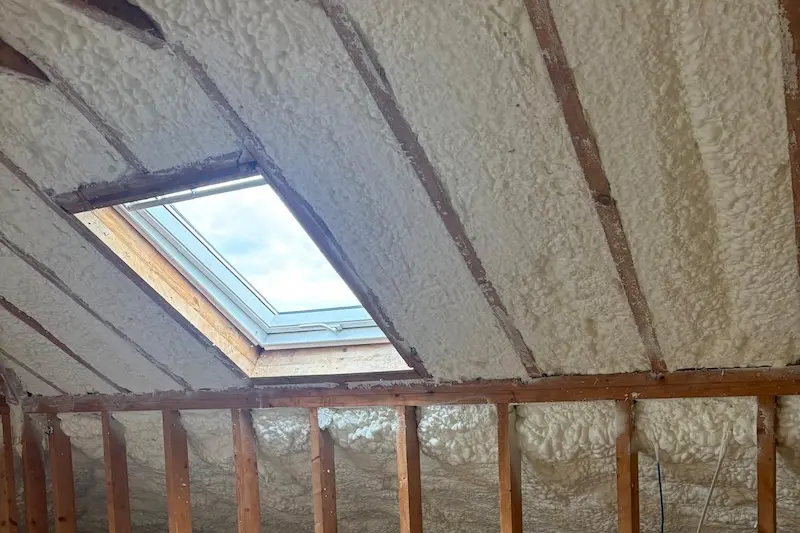
Attic spray foam insulation has become one of the most talked-about energy upgrades for Irish homeowners, and it’s easy to see why once you understand what it actually does.
Older homes lose a surprising amount of heat through the roof, often through gaps that older insulation simply can’t reach. Spray foam takes a different approach, expanding on application to seal every crack and crevice as it goes.
The result is a warmer, quieter, more efficient home, with fewer draughts and lower bills to show for it. In this guide, we’ll walk through seven amazing benefits of spray foam insulation for your attic!
Why attic spray foam insulation performs differently to older materials
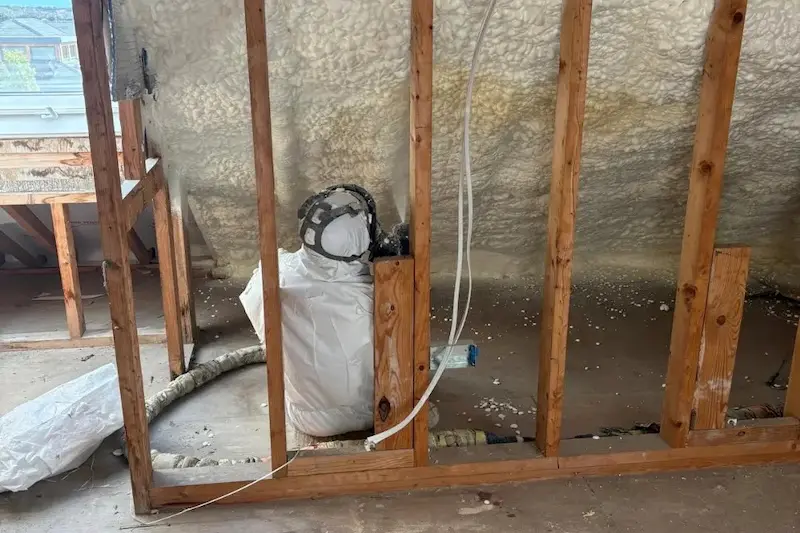
Spray foam insulation works on a completely different principle from other materials; it’s sprayed as a liquid that expands almost instantly, filling every gap, joint and awkward corner as it goes.
Once it cures, it forms a single, continuous layer rather than a series of overlapping pieces. That’s the real difference. Other options both do a good job of slowing heat loss, but any small gap left behind, around a joist, a pipe, or an old vent, gives heat a way out.
Spray foam removes most of those gaps in one application, which is why it performs so consistently even in older, less regular attics.
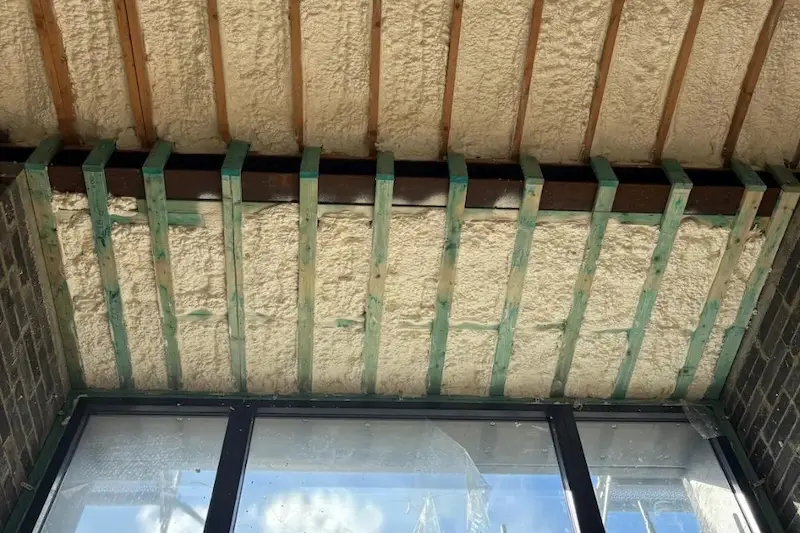
7 amazing benefits of attic spray foam insulation
So what does that actually mean for your home? Here are seven amazing benefits of attic spray foam insulation, from the everyday to the easily overlooked.
#1. Creates an airtight seal that stops draughts at the source
Draughts don’t usually come from nowhere. They come from small gaps around joists, pipes, and old vents that traditional insulation can’t fully close. Spray foam expands into these spaces as it cures, sealing them at the source rather than simply covering them over.
The result is a noticeably draught-free attic, and a home that holds its heat instead of losing it through a dozen small escape routes you’d never think to check.
#2. Delivers a lower U-value and noticeably smaller heating bills
A well-sealed, well-insulated attic achieves a much lower U-value than one fitted with older or patchy insulation, meaning far less heat passes through the roof and out of the house.
Homeowners who upgrade to spray foam typically see a real difference in their heating bills, some by as much as 30%, simply because the boiler doesn’t need to work as hard to keep the house at a comfortable temperature.
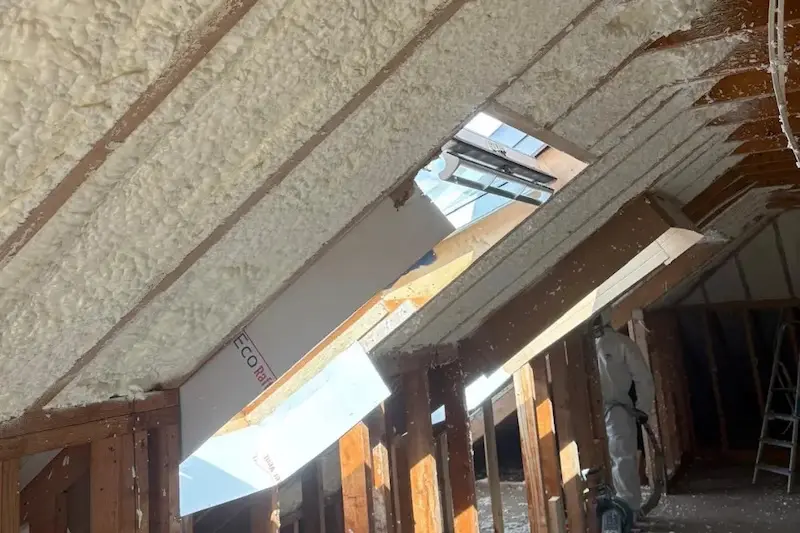
#3. Reaches every gap, corner and awkward angle
Not every attic is a simple, regular space. Dormer conversions, cut roofs, and older properties often have awkward angles, tight corners, and irregular joist spacing that other insulation struggles to fit neatly.
Because spray foam is applied as a liquid, it naturally fills these spaces rather than being cut and fitted around them. That makes it a particularly good option for the kind of older, characterful homes common in Ireland.
#4. Keeps your home comfortable in summer as well as winter
It’s easy to think of insulation as a winter product, but a well-sealed attic works both ways. In summer, the same airtight layer that keeps heat in during colder months also slows hot air building up under the roof.
That means fewer uncomfortably warm evenings upstairs, and a home that holds a steadier temperature all year round, not just when the heating is on.
#5. Cuts down on noise from outside
Open-cell spray foam in particular has genuine soundproofing qualities, thanks to its soft, flexible structure. It absorbs sound rather than simply blocking it, which makes a real difference in homes near busy roads.
For anyone who’s ever been kept awake by rain hammering off the roof, this is one of the benefits that’s easy to underestimate until you experience it!
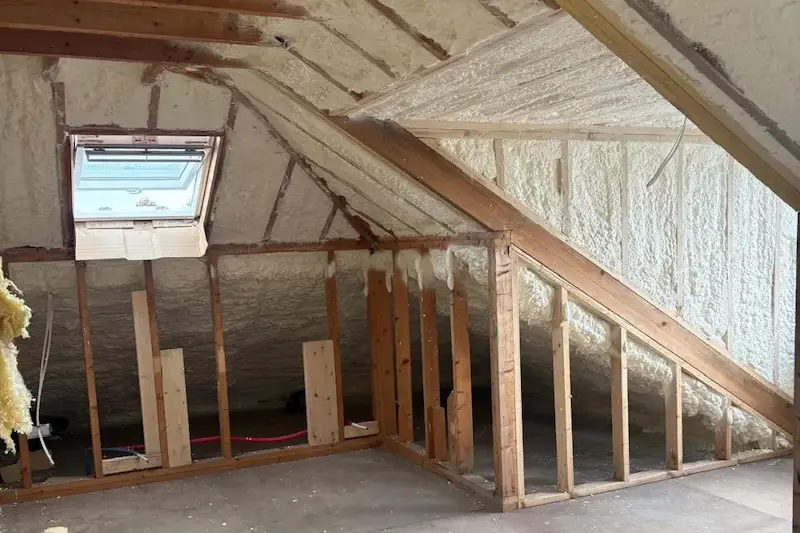
#6. Attic spray foam insulation keeps performing for decades
Attic spray foam insulation doesn’t sag, settle, or compress the way some traditional materials can over time. Once it’s cured, it holds its shape and its performance for decades, without needing to be topped up or replaced.
That makes it less a purchase and more a long-term fixture of the house, one that keeps paying back in lower bills and steadier comfort long after the installation itself is forgotten about.
#7. Attic spray foam insulation works with your roof, not against it
A properly installed system doesn’t fight against your roof’s structure; it works with it. When attic spray foam insulation is fitted with the required ventilation card and air gap, it complies with Irish Building Regulations Part L and allows the roof space to breathe exactly as it should.
This matters because badly installed spray foam, without proper ventilation, is where problems like damp and condensation can start. Done correctly, though, it protects roof timbers rather than putting them at risk, which is worth knowing if you’ve ever heard a cautionary story about spray foam and assumed it applied to every installation.
Choose Lovinsulation for expert attic spray foam insulation
If you’re ready to see these benefits in your own home, our experienced team at Lovinsulation installs both open-cell and closed-cell spray foam, recommending the right option for your attic after a free, no-obligation survey.
Every installation is carried out to Irish Building Regulations, with the correct ventilation card and air gap fitted as standard, so you get the performance without the risk. As an SEAI-registered installer, we can also guide you through the grant process from start to finish.
Here’s what you can expect when you choose us:
- Free no-obligation attic survey
- SEAI grant guidance available
- €200 online discount
- Open-cell and closed-cell spray foam, matched to your home
- Installed with ventilation cards to Irish Building Regulations
- Up to 30% savings on energy bills
- Proven track record with 3,000+ homes insulated
- Nearly a decade of industry experience
If you’re ready to stop losing heat through your roof, get in touch today and find out how much of a difference attic spray foam insulation could make to your home!
Attic spray foam insulation FAQs
Q: How much does attic spray foam insulation cost?
A: Costs vary depending on the size of your attic and whether open-cell or closed-cell foam is the right fit. We provide a free, no-obligation survey and quote so you know exactly what to expect before any work begins.
Q: Is spray foam insulation safe for my attic?
A: Yes, when installed by qualified, SEAI-registered attic insulation professionals to current building standards. Concerns around spray foam almost always trace back to poor installation or the wrong product for the property, not the material itself.
Q: Will spray foam insulation affect my mortgage or survey?
A: Properly installed spray foam, complete with a ventilation card and compliant air gap, shouldn’t cause issues with a mortgage or property survey. Problems tend to arise only where installation was rushed, or ventilation was skipped, which is why correct installation matters so much!
Q: What’s the difference between open-cell and closed-cell spray foam?
A: Open-cell foam is softer and more breathable, making it a good all-round choice for residential attics. Closed-cell foam is denser and more moisture-resistant, and is often used where extra structural support or a moisture barrier is needed.
Q: Does attic spray foam insulation need a ventilation gap?
A: Yes. A ventilation card and 50mm air gap are required to meet Irish Building Regulations Part L, allowing the roof structure to breathe and preventing a build-up of condensation.
Q: How long does attic spray foam insulation last?
A: Once cured, it holds its shape and performance for decades, without sagging, settling, or needing to be topped up like some traditional materials.
Q: Are SEAI grants available for spray foam insulation?
A: Yes. Lovinsulation is SEAI-registered, and we can guide you through eligibility and the application process as part of your free survey.