
Choosing the best type of attic insulation is one of the simplest ways to make your home warmer, more comfortable, and cheaper to heat. With energy bills continuing to rise, stopping heat from escaping through the attic has never been more important. However, many homeowners feel unsure where to start, faced with lots of different insulation materials, mixed advice, and attic spaces that all seem to have their own quirks.
Thankfully, our guide is here to make the process easier. In this article, we break down the key things you need to know, such as how different insulation types perform and explain what really matters when choosing effective attic insulation!
What determines the best type of attic insulation for your home?
Before choosing an insulation material, it is important to understand the environment it will be installed in.
The “best” insulation is not simply the one with the lowest U-value; it is the option that works best with the layout, condition, and ventilation of your home. Taking the time to assess these factors helps ensure the insulation performs properly and delivers lasting results.
Your home’s structure, layout, and existing insulation
The design of your roof plays a major role in determining what insulation options are suitable. A standard pitched roof allows for different installation methods than a flat roof or a more complex dormer structure.
Ventilation is also critical. If insulation blocks airflow in a roof that needs to breathe, it can lead to moisture build-up and timber damage over time.
It’s also important to consider what insulation is already in place. Is it damp, compressed, or too thin to be effective? Understanding whether you are adding to existing insulation or replacing it entirely is a key first step.
Energy efficiency goals and heat-loss priorities
Not every homeowner has the same goals. Some aim for high levels of airtightness to meet modern energy standards, while others simply want to reduce draughts and make rooms more comfortable.
Think about what matters most in your home. Are you focused on keeping heat in during winter, preventing overheating in summer, or both? Noise reduction can also be a consideration, especially in areas affected by traffic or heavy rain.
These priorities all influence which insulation type makes the most sense!
Budget, longevity, and maintenance expectations
Cost is always part of the decision, but it is best viewed in terms of long-term value.
Lower-cost materials may seem appealing at first, but some can settle or lose effectiveness over time, meaning they may need to be topped up later. Other options cost more initially but maintain their performance for decades.
Weighing upfront spend against durability and energy savings helps you judge the true return on investment.
Comparing the main attic insulation options
There is no single attic insulation solution that suits every home. How well a material performs depends not only on the product itself, but also on how it is installed and the conditions within the attic space.
Traditional/rollout insulation: When a traditional option works best
When looking for the best type of attic insulation for simple, accessible spaces, traditional rollout insulation remains a popular choice.
It is widely available, relatively affordable, and non-combustible. These materials work well in attics with standard joist spacing, good access, and minimal obstructions, making installation straightforward in many homes.
That said, roll insulation does have drawbacks. Because it is laid by hand, small gaps can be left around pipes, cables, or irregular edges, allowing heat to escape. Compression is another issue; if storage items are placed on top, the insulation loses much of its effectiveness.
For these reasons, rollout insulation is best suited to clear, uncluttered attic floors where cost is a primary concern.
Blow-in/loose-fill options: Flexibility for uneven or hard-to-reach spaces
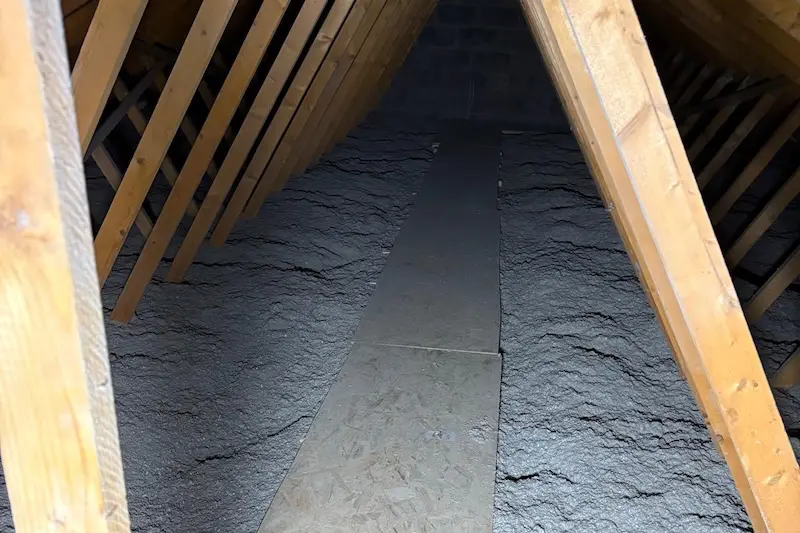
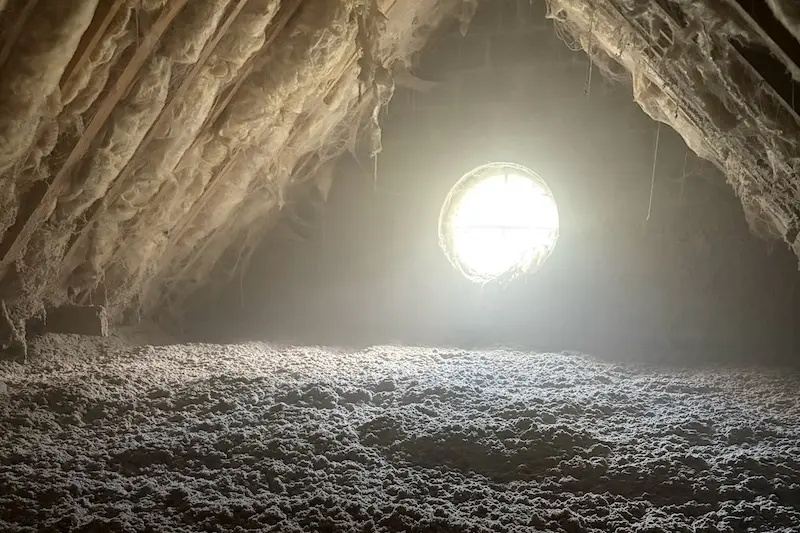
Loose-fill insulation is often a better fit for older or irregular attics. Applied using specialist equipment, it fills awkward gaps, tight corners, and areas around obstructions far more effectively than rolls.
This creates a more even layer of insulation, helping to reduce cold spots and improve overall thermal performance.
Spray-applied insulation options: When airtightness matters most
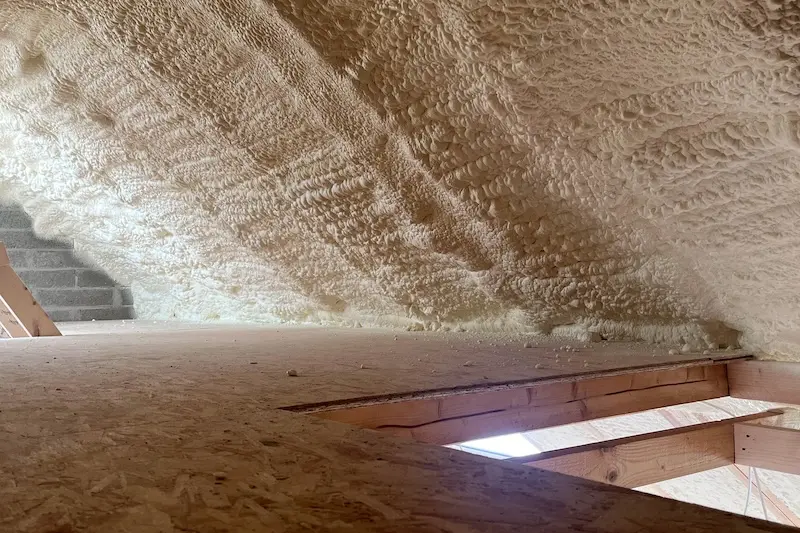
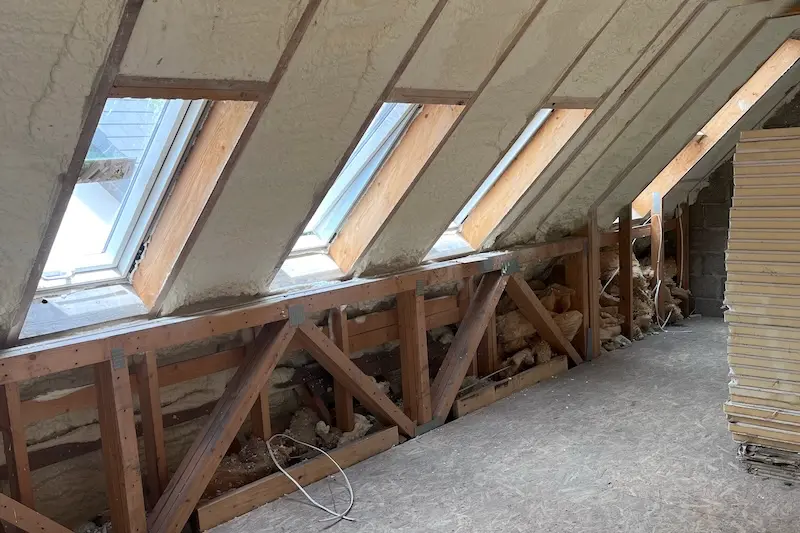
Spray-applied insulation is highly effective at sealing air leaks. As it expands, it fills cracks and crevices that other materials cannot reach, significantly reducing draughts. This makes it especially suitable for dormer bungalows or attics being converted into living areas.
Although it involves a higher upfront cost, its ability to control airflow also improves heat retention and sound insulation.
Deciding on the best type of attic insulation for long-term performance
Choosing the best type of attic insulation means thinking beyond immediate comfort and considering how your home performs throughout the year. Seasonal changes, moisture levels, and how the attic is used all play a role in long-term success.
Which insulation performs best in your attic’s real conditions?
Moisture management is one of the most important considerations. In humid conditions, insulation must either cope well with moisture or be installed in a way that maintains proper ventilation. Storage use is another factor; insulation that can be easily compressed may not be suitable if the attic is frequently used.
Roof design also matters, as cold roof and warm roof systems require different insulation approaches to work effectively.
Installation quality, building regulations, and common mistakes to avoid
Even the best insulation will underperform if installed incorrectly. Common problems include:
- Blocking Eave Vents: This restricts airflow and can cause condensation and mould.
- Cold Bridging: Gaps around edges or junctions allow heat to escape.
- Ignoring Wiring: Covering certain electrical cables too heavily can lead to overheating.
Professional attic insulation installers avoid these issues and ensure insulation depth meets current building regulations, helping to improve your BER (Building Energy Rating).
When to upgrade, replace or combine different insulation types
If existing insulation is wet, contaminated, or extremely thin, replacing it entirely is usually the best option. In other cases, combining insulation types can deliver strong results.
For example, a breathable wool layer on the attic floor can be paired with spray insulation along the rafters to create a warmer, more usable space.
Choosing the right attic insulation installer to guide your decision
A professional assessment is the most reliable way to achieve long-term performance.
A reputable attic insulation installer will do more than provide a quote; they will check timber condition, identify areas where heat is escaping, and assess ventilation levels.
When speaking with contractors, ask about their qualifications, experience with different insulation types, and whether they can advise on available energy grants.
Choose the best type of attic insulation for your home with our expert help
Choosing the right attic insulation is about creating a warmer, healthier, and more energy-efficient home that performs properly for years to come. At Lovinsulation, we combine expert advice with proven solutions to deliver results that genuinely make a difference:
- Cellulose Insulation: An eco-friendly option made from recycled paper, cellulose is blown into place to fill every gap and corner. It delivers excellent thermal performance, helps regulate moisture naturally, and is ideal for reducing heat loss in both older homes and modern builds.
- Spray Foam Insulation: Spray foam expands on application to create an airtight seal that stops draughts and heat loss at the source. Open-cell foam is breathable and great for residential attics, while closed-cell foam offers added moisture resistance and structural strength where required.
- Traditional Roll Insulation (aka fibreglass): A familiar and cost-effective solution, roll insulation works well in standard, accessible attics with clear joist spacing. When installed correctly, it provides reliable thermal protection and is a practical choice for budget-conscious upgrades.
With over 3,000 successful installations across Dublin, SEAI registration, and access to available grants, our family-run team takes the guesswork out of upgrading your attic.
If you’re ready to cut heat loss, lower your energy bills by up to 30%, and enjoy a more comfortable home all year round, get in touch today and let Ireland’s trusted insulation experts recommend the solution that’s right for your home.
The best type of attic insulation for your home FAQs
Q: What is the best type of attic insulation for a typical Irish home?
A: The best type of attic insulation depends on the home’s roof structure, ventilation, and energy goals, but common options include cellulose, spray foam, and traditional rollout, each suited to different attic conditions.
Q: How do homeowners choose the best type of attic insulation for their home?
A: Choosing the right attic insulation involves assessing roof design, existing insulation, ventilation, moisture levels, and how the attic space is used throughout the year.
Q: Is spray foam insulation better than traditional attic insulation?
A: Spray foam insulation can outperform traditional insulation where airtightness and draught reduction are priorities, but it must be installed correctly to maintain ventilation and comply with building regulations.
Q: When is cellulose insulation the best type of attic insulation?
A: Cellulose insulation is often ideal for homes with uneven or hard-to-reach attic spaces, as it fills gaps and corners more effectively than roll insulation and helps regulate moisture.
Q: What is the most cost-effective attic insulation option?
A: Traditional rollout insulation is usually the lowest upfront cost option and works best in clear, accessible attics with standard joist spacing.
Q: How much heat can be lost without proper attic insulation?
A: Up to 30% of a home’s heat can escape through an uninsulated or poorly insulated attic, leading to higher energy bills and reduced comfort.
Q: Can different attic insulation types be combined?
A: Yes, combining insulation types is common, such as using breathable insulation at the attic floor level alongside spray insulation in specific areas to improve overall performance.
Q: Why is professional installation important when choosing attic insulation?
A: To ensure insulation is installed to the correct depth, ventilation paths remain clear, and all work meets building regulations, as even high-performance insulation can fail if installed incorrectly.