
Attic insulation types vary more than most homeowners realise, and the option currently sitting between your joists could be quietly costing you money every winter.
Rolled insulation, blown-in cellulose, and sprayed foam all show the same process – heat escaping through your roof – but they go about it in very different ways, with different costs, different lifespans, and different results.
There’s no single insulation that suits every attic. An older Dublin terrace with a tight, awkward roof space has very different needs from a newly built home with a regular, easy-to-access attic, and getting that choice right can be the difference between a genuinely warmer home and a wasted upgrade.
In this guide, we’ll compare cellulose, spray foam, and traditional rollout insulation side by side, so you can see exactly how each one performs and which is likely to suit your home best!
What to weigh up before choosing between attic insulation types
Before getting into the materials themselves, it’s worth knowing what actually separates one type of attic insulation from another. Cost matters, of course, but it’s rarely the only factor worth considering, and a cheaper material that underperforms in your particular attic can end up costing more in wasted heat over time.
Performance factors that separate attic insulation types
A handful of factors decide how well any attic insulation type performs once it’s installed:
- U-value: how much heat passes through the material. The lower the U-value, the better the insulation performs, so it’s worth asking about directly rather than relying on thickness alone.
- Air-sealing: whether the material closes gaps around joists, pipes, and awkward corners, or simply lays over the top of them.
- Moisture handling: how the material copes with Ireland’s damp climate, and whether it can manage humidity without losing performance.
- Soundproofing: how much outside noise and noise between floors the material absorbs.
- Longevity: whether the material holds its shape and performance for decades, or needs topping up as it settles or compresses.
Why ventilation matters as much as the material itself
Whichever attic insulation type ends up in your home, ventilation matters just as much for how well it performs. A well-chosen material installed without proper airflow can trap moisture rather than manage it, leading to condensation, damp, and even mould over time. It’s one of the main reasons a professional survey counts for more than picking a material off a shelf, since the right approach always depends on how your particular attic breathes.
Comparing three major attic insulation types
These types each take a different approach to the same problem, and each comes with its own strengths.
Cellulose insulation
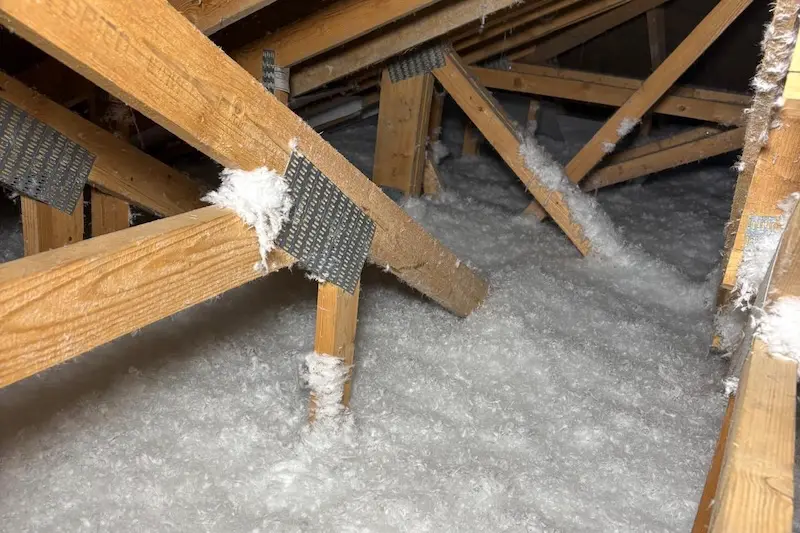
Cellulose insulation is made from around 85% recycled paper, treated with natural fire retardants such as boric acid and magnesium hydroxide, and blown into the attic as loose fibres. Because it’s blown rather than laid, it fills every gap, crack, and awkward corner as it goes, which makes it particularly effective in older or irregularly shaped attics.
Its hygroscopic properties let it absorb and release moisture without losing thermal performance, regulating humidity naturally rather than trapping it. It’s also dense enough to provide genuinely strong soundproofing, and once installed, it’s designed to last the life of the building without needing to be topped up.
For homeowners weighing up eco-credentials, cellulose has more recycled content than any other commercially available insulation material. Its density gives it real thermal mass too: heat takes roughly 9.5 hours to pass through a 350mm layer of cellulose, compared to around 3.6 hours for traditional fibreglass of the same thickness.
Spray foam insulation
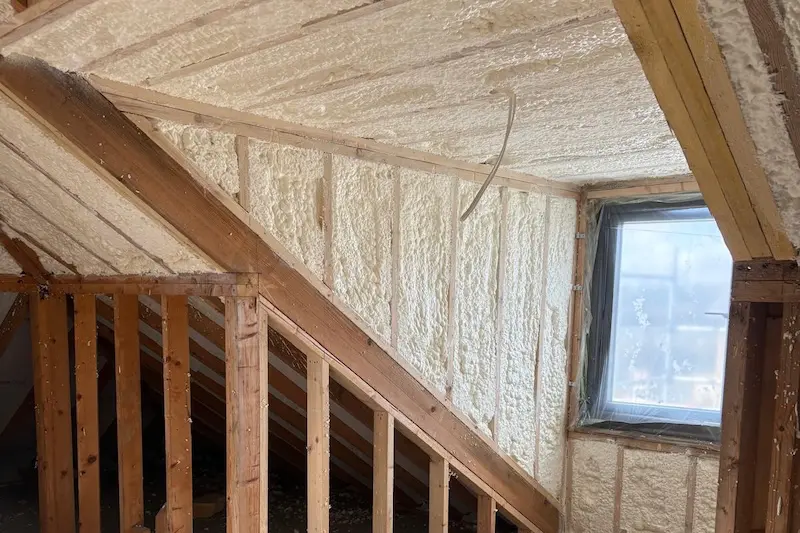
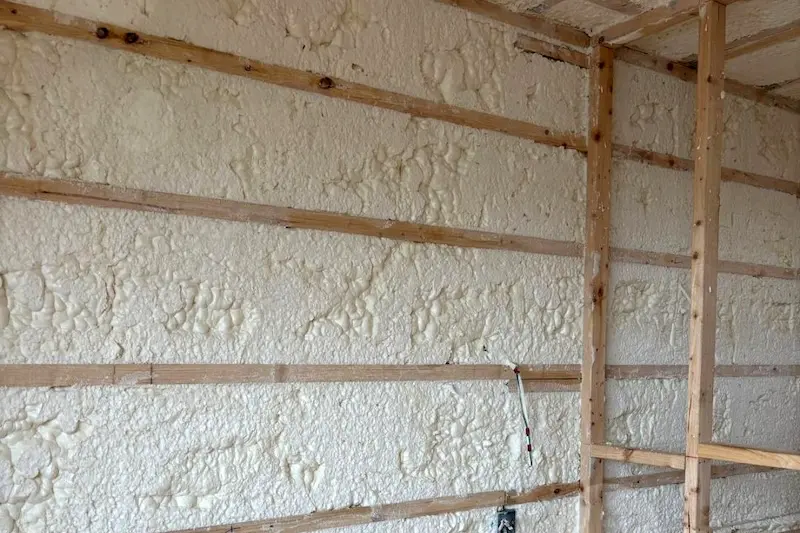
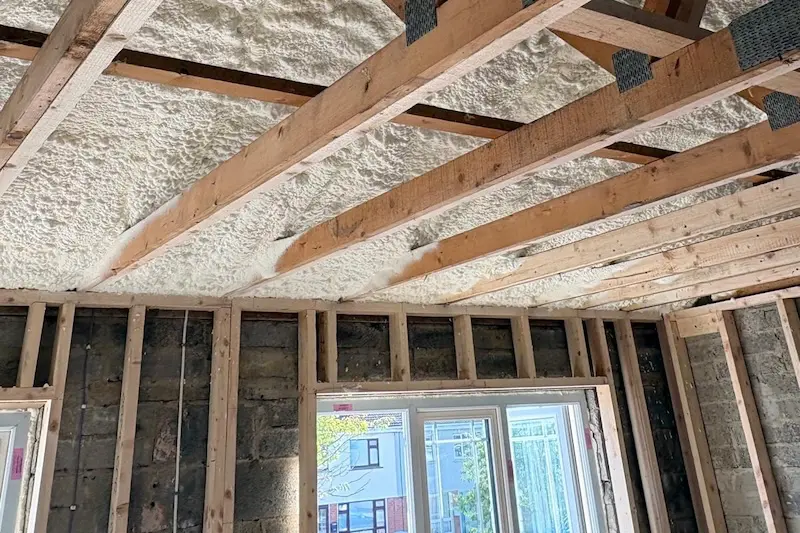
Spray foam insulation is applied as a liquid that expands almost instantly, sealing gaps, joints, and awkward angles as it cures into a single, continuous layer. That airtight seal is what sets it apart. Rather than just slowing heat loss, it closes off most of the small escape routes other materials can leave behind, cutting heat loss by up to 50% compared to more traditional insulation.
There are two main types. Open-cell spray foam is softer and more breathable, with particularly good soundproofing qualities, while closed-cell spray foam is denser, more moisture-resistant, and can even add structural support in the right application. Once cured, it holds its shape and performance for decades without sagging or settling.
Because it forms such a tight seal, spray foam needs a ventilation card and a 50mm air gap fitted beneath the roof felt to meet Irish Building Regulations Part L. Done correctly, this keeps the roof space breathing properly and avoids the damp and condensation issues spray foam is sometimes, wrongly, blamed for.
Traditional rollout insulation (aka fibreglass)
Traditional rollout insulation, sometimes still called fibreglass, is the option most homeowners picture when they think of attic insulation: rolls or batts laid across and between the joists. It remains one of the more affordable, widely available options, and it’s quick to install with minimal disruption to the rest of the home.
Its main limitation is coverage. Because it’s laid rather than blown or sprayed, it’s less effective at sealing every gap than cellulose or spray foam, and it can lose effectiveness if compressed or disturbed over time. Its typical lifespan also tends to run shorter, around 15 to 20 years, before performance starts to degrade, and it’s best fitted by a certified installer given the skin and respiratory irritation it can cause during handling.
Even so, for a straightforward attic with regular joist spacing and a tighter budget, traditional rollout insulation still performs solidly when it’s installed correctly.
Which attic insulation type will best suit your home?
Once you know how each material performs, the right choice usually comes down to your attic’s shape, your priorities, and your budget.
Attic insulation types for older or awkward attics
Ireland is full of period properties, dormer conversions, and cut roofs with irregular joist spacing, exactly the kind of spaces where a material that can be blown or sprayed into place tends to outperform pre-cut rolls. Cellulose and spray foam both handle awkward angles far more easily than rollout insulation, simply because neither needs to be measured and cut to fit.
Attic insulation types for eco-conscious homeowners
If recycled content and lower embodied energy matter to you, cellulose is the clear standout among the three, thanks to its high recycled paper content and its manufacture without any greenhouse gas propellants.
Attic insulation types for budget-conscious upgrades
Where upfront cost is the main factor and the attic itself is a regular, easy-to-access shape, traditional rollout insulation remains a familiar and affordable starting point, even if it doesn’t quite match cellulose or spray foam for airtightness.
Choose Lovinsulation for the right attic insulation for your home
If you’re not sure which of these three options is right for your attic, that’s exactly why we always start with a free, no-obligation survey rather than a guess over the phone.
At Lovinsulation, we provide the attic insulation types covered above and will recommend the one that suits your home best. Here’s what you can expect when you choose us:
- A free, no-obligation attic survey before any recommendation is made
- A choice of cellulose, spray foam, and traditional rollout insulation, matched to your attic
- Guidance through the SEAI grant process, as an SEAI-registered installer
- A €200 discount for homeowners who book online
- Over 3,000 homes and businesses insulated across Dublin and beyond
- Heating bill savings of up to 30% for many of our customers
Ready to find out which attic insulation type suits your home? Get in touch today and let’s get your attic sorted properly, once and for all!
Attic insulation types FAQs
Q: What are some of the major attic insulation types available in Ireland?
A: Three common attic insulation options are cellulose, spray foam, and traditional rollout insulation, sometimes still called fibreglass. Each performs differently depending on your attic’s shape, condition, and your priorities.
Q: Which attic insulation type is best for an older Irish home?
A: Cellulose and spray foam tend to perform better in older or awkward attics, since both can be blown or sprayed into gaps and irregular corners that rolled insulation struggles to reach.
Q: Is spray foam a better attic insulation type than cellulose?
A: Neither is universally better. Spray foam offers the tightest air seal and can cut heat loss by up to 50% compared to traditional insulation, while cellulose delivers similar performance with a stronger eco profile and excellent soundproofing.
Q: Do all attic insulation types qualify for SEAI grants?
A: As an SEAI-registered installer, we can guide you through grant eligibility for attic insulation regardless of which material ends up being the right fit for your home.
Q: Which attic insulation type is the most eco-friendly?
A: Cellulose insulation is generally the most eco-friendly option, thanks to its high recycled paper content and natural fire retardants.
Q: Can different attic insulation types be combined or topped up?
A: In some cases, yes, though it depends on the condition of your existing insulation. A free survey is the best way to find out what’s already there and what would work alongside it.
Q: Which attic insulation type is best at stopping draughts?
A: Spray foam is generally the strongest performer here, since it expands to seal gaps and joints as it cures, closing off draughts at the source rather than simply covering them over.