
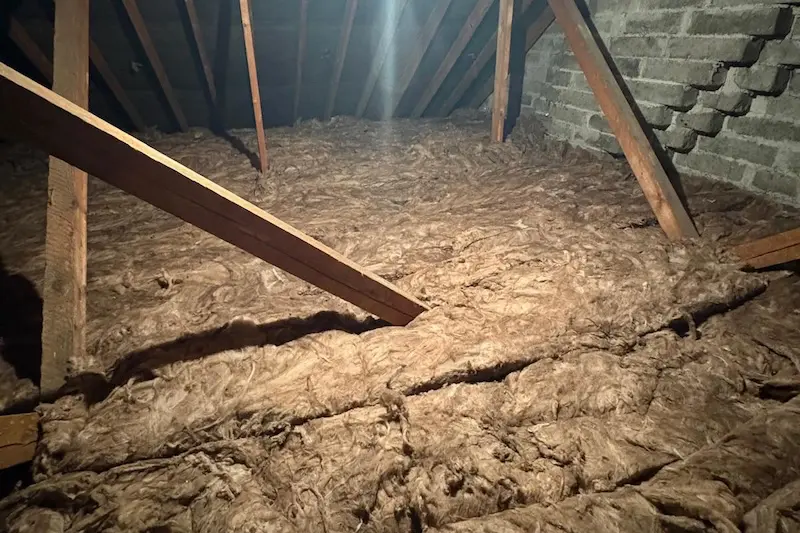
Finding the best attic insulation for homes in Dublin starts with the house itself, because a Victorian red-brick in Rathmines and a 2000s semi-D in Swords have very different attics, with different shapes, histories and problems tucked away under the roof.
Have you ever noticed how the upstairs rooms are the first to go cold on a January morning? In many Dublin homes, that’s heat escaping through an attic that was never properly insulated, or was insulated to a standard that’s long since been overtaken.
The right fix depends on your home’s age, the attic’s layout and condition, and how you use the space, which is why an option that works brilliantly next door might be the wrong one for you.
In this guide, we’ll look at how your home, your attic and a few key standards should shape your choice!
How Dublin’s housing affects the best attic insulation for homes
Dublin’s housing stock covers centuries of building, and each era leaves its own mark on the attic.
Georgian and Victorian terraces
Period homes in areas such as Rathmines, Ranelagh, Drumcondra and Phibsborough often have tight, irregular roof spaces, older timbers and awkward access. These attics need insulation that can reach into narrow eaves without leaving gaps, along with careful attention to ventilation, since older roofs were built to breathe.
Mid-century semis and terraces
Many homes built between the 1930s and 1970s, including the Corporation estates in Crumlin, Cabra and Marino, went up with little or no attic insulation. Access is usually easier, though old water tanks and exposed pipework need to be covered properly, because the roof space gets colder once the ceiling below is well insulated.
Estate homes built before 2011
Homes built across suburbs such as Lucan, Swords and Clonsilla in the 1980s, 1990s and 2000s often have a thin layer of around 100mm, frequently flattened by boxes or boarding laid on top. That falls well short of what current standards expect. Homes built and occupied before 2011 are also the ones eligible for SEAI attic insulation grants.
Bungalows, dormers and top-floor apartments
Dormer bungalows, cut roofs and top-floor apartments often come with sloped ceilings and very limited crawl space. Here, the shape of the roof space narrows the options more than the budget does, and the right approach often means insulating along the slope of the roof as well as across the attic floor.
What to check in your attic first
A quick look in the attic answers most of the important questions before anyone needs to talk about materials.
How much insulation is already there
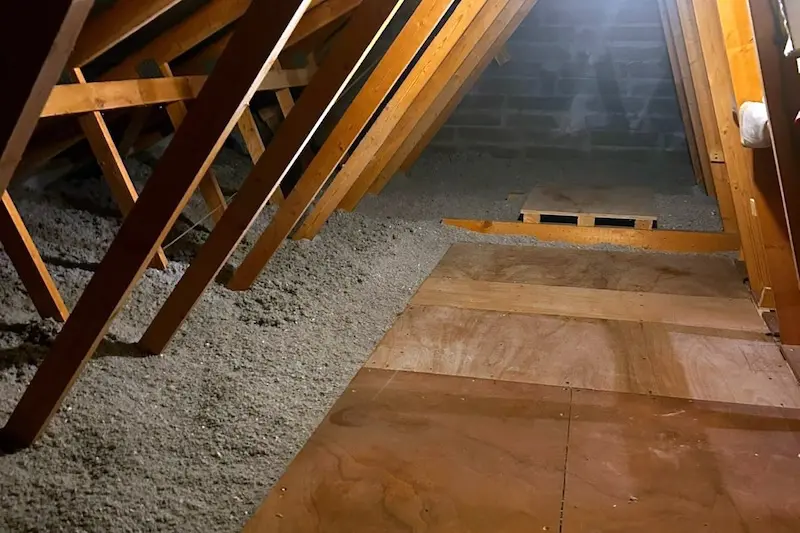
Check the depth of the insulation between and over the joists. Many older homes have around 100mm, while current standards generally call for 270mm to 300mm or more, depending on the material. Insulation that’s dry and intact can usually be topped up, while anything damp, mouldy or badly compressed is better removed.
Signs of damp or poor ventilation
Look for condensation on the underside of the roof felt, dark staining on the timbers, a musty smell, or eaves packed solid with old insulation. Upgrading attic insulation changes how moisture moves through the roof space and can expose a ventilation weakness the house already had, so airflow is worth checking before any material is chosen.
How you use the attic space
Boards laid directly on insulation crush it, so raised boarding is the better option if the attic is used for storage. If there’s any chance of a conversion, it’s worth knowing now: insulating at the rafters to create a warm attic is a different job from insulating at the joists, and planning early avoids paying twice.
What the best attic insulation for homes needs to deliver
Whatever material ends up in your attic, a few standards separate a proper upgrade from one that only looks the part.
U-values and building regulations
A U-value measures how much heat passes through the roof, and the lower the number, the better. Irish Building Regulations Part L sets a backstop U-value of 0.16 W/m²K for attics, and a well-installed attic can do considerably better, so it’s worth asking any installer what U-value they expect to achieve as well as how deep the insulation will be.
Why the best attic insulation for homes depends on the installation
Even the right material underperforms if it’s fitted poorly. SEAI’s own inspections regularly flag the same issues, and a proper job should cover all of them:
- The attic hatch insulated to the same standard as the rest of the attic, with a draught seal around its edges
- Pipework and the cold water tank fully insulated, with no gaps
- Eaves ventilation kept clear so air can still flow through the roof space
- Insulation kept back from recessed downlights and cables treated correctly
Getting the order of upgrades right
For most Dublin homes, the attic is the first and most affordable fabric upgrade. It matters for grants further down the line too, since SEAI’s newer windows and doors grant requires attic insulation to be rated Good or Very Good on your BER.
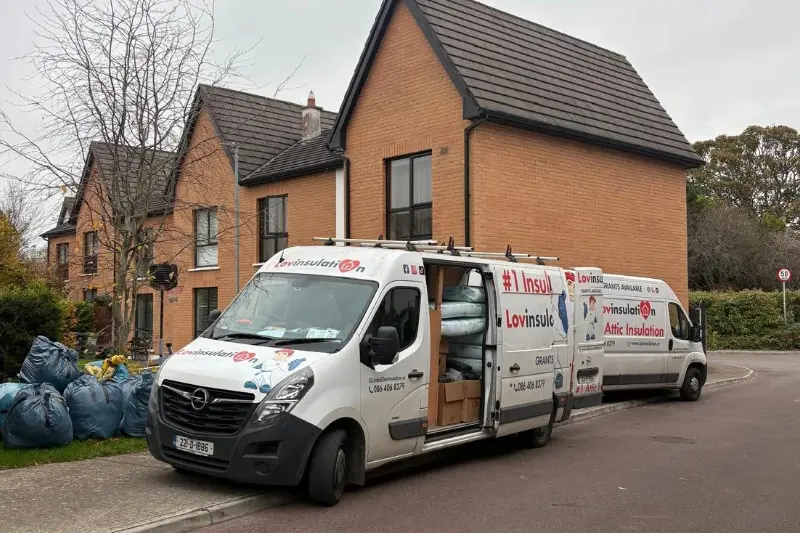
Choose Lovinsulation for the best attic insulation for homes in Dublin
Every Dublin attic is different, which is exactly why we start every job with a free, no-obligation survey before recommending anything.
At Lovinsulation, we install three main types of attic insulation and match each one to the home in front of us:
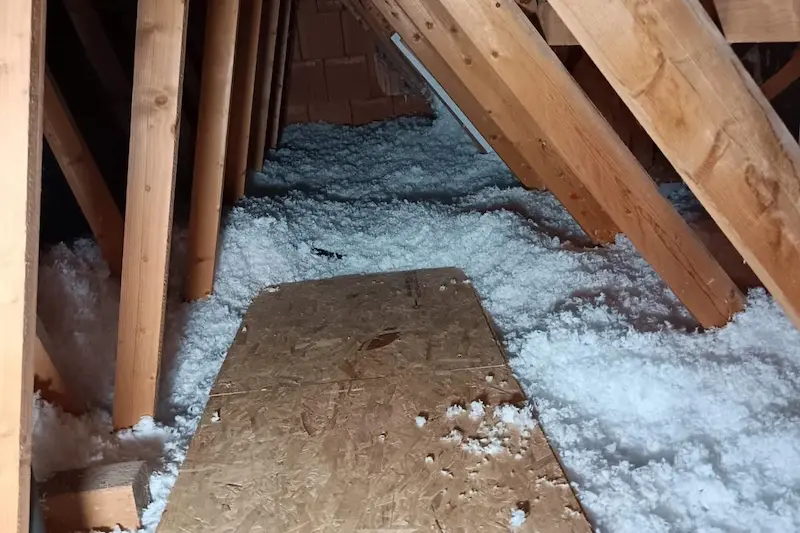
- Cellulose insulation: Blown into place to fill every gap around joists and pipes, making it a strong fit for older, irregular attics. It regulates humidity naturally and lasts the life of the building.
- Spray foam insulation: Open-cell or closed-cell foam that seals draughts and reaches dormers and hard-to-insulate spaces. We always fit a ventilation card and 50mm air gap beneath the roof felt to meet Irish Building Regulations.
- Traditional rollout insulation (fibreglass): A familiar, affordable choice for regular, easy-access attics, laid to the correct depth and kept free of compression.
Here’s what you can expect when you choose us:
- A free, no-obligation attic survey
- Cellulose, spray foam or rollout insulation, matched to your attic
- SEAI grant guidance as an SEAI-registered installer
- A €200 online discount
- The option to pay in instalments over 12 or 18 months with Humm
- Over 3,000 homes and businesses insulated since 2018
- Heating bill savings of up to 30% for many of our customers
If you’re ready to find the right attic insulation for your home, get in touch today and let’s make your home warmer and cheaper to heat this winter!
Best attic insulation for homes FAQs
Q: What is the best attic insulation for homes in Dublin?
A: It depends on the house. Older and irregular attics usually suit cellulose or spray foam, which reach gaps that rolls struggle with, while regular, easy-access attics can perform well with traditional rollout insulation. A free survey is the simplest way to find out what suits your home.
Q: How much attic insulation does an older Dublin home need?
A: Many older homes have around 100mm of insulation, which falls well short of current standards. Most attics need roughly 270mm to 300mm or more, depending on the material.
Q: Should old attic insulation be topped up or removed?
A: If the existing insulation is dry, clean and not badly compressed, it can usually be topped up. If it’s damp, mouldy or crushed flat, it’s better removed before new insulation goes in.
Q: Can I still use my attic for storage after it’s insulated?
A: Yes. Raised boarding sits above the insulation so it isn’t crushed, letting you keep your storage space without losing performance.
Q: Can insulating an attic cause damp?
A: It can if ventilation is overlooked. New insulation changes how moisture moves through the roof space, so keeping the eaves clear and checking airflow as part of the job prevents condensation from building up.
Q: Do I need an SEAI-registered installer to get an attic insulation grant?
A: Yes. Grant-funded attic insulation must be carried out by an SEAI-registered contractor, and you’ll need to apply before any work begins. Your home must also have been built and occupied before 2011.